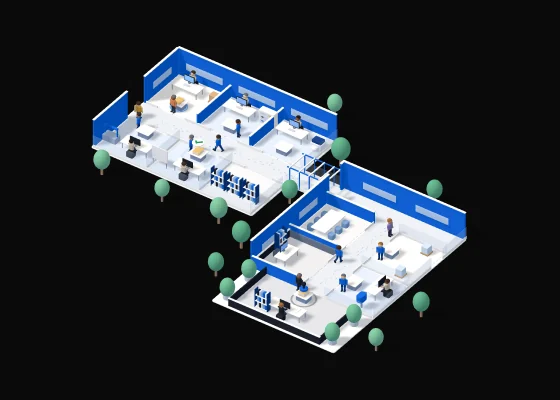
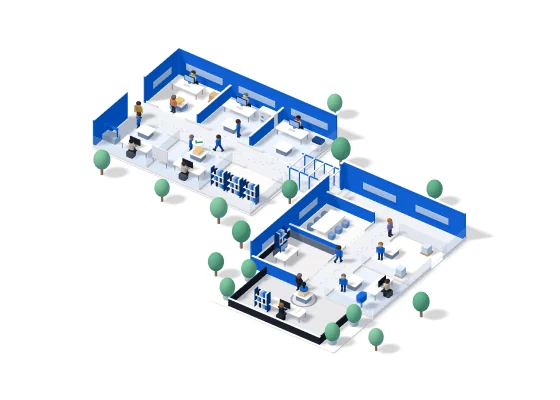
The file arrives
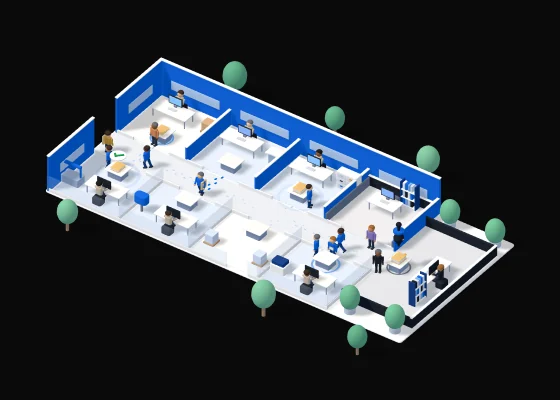
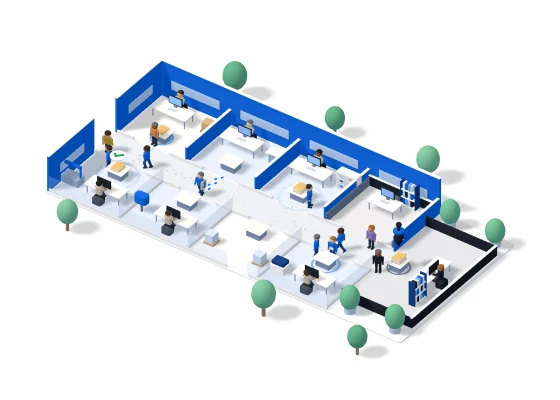
A claim and its documents reach the claims clerk. Nothing is decided yet.
Follow one complex claim, from the first document to the answer.
Walk us through your claims processA claim and its documents reach the claims clerk. Nothing is decided yet.
AI agents check the policy, read the reports, list the open questions and compare the invoices. They propose. They decide nothing.
~3.5 hCoverage check alone: of a claims handler's week
Estimate: 8.75% of working time (Claude-estimated, Anthropic Economic Index 2026) × 40 h · US labour data (O*NET 31.0) · task 21417 · all claim types
The claims handler sees the prepared file and sets the reserve and the amount. This step stays with a person.
An AI agent drafts the offer or refusal from that decision. A person reviews, signs and sends it.
AI agents pull out the key facts and draft the information requests; the underwriter judges the risk.
AI agents log the request and prepare the endorsement and premium; a person checks the result.
AI agents screen for irregularities and search the records; an investigator decides what to recommend.
Public usage data shows AI mostly at the two ends of the process: front-office work, and drafting reports and letters. It shows little in the middle, where the file work happens. That middle is document work with high potential. Decisions stay with people.
Intake, data entry and applications. Clerical work at the front office is where use is seen most today.
Documents and data about the risk can be read and summarised. The underwriter still judges the risk and decides.
Requests, changes, renewals and correspondence follow set steps. AI agents can prepare them. A person checks them.
Reading policies, reports and invoices is document work. AI agents can prepare the file. The handler decides and pays within authority.
AI agents can screen files, search records and draft the report. The investigator makes the finding.
AI agents can prepare data and draft risk and regulatory reports. Sign-off stays with the actuary and the compliance officer.
We begin with your process, not with a tool. Each stage ends with something you can judge before you commit to the next.
Two to four weeks. We map your workflows, data and systems. You get a written technical proposal and a roadmap.
We build with your team in steps. Each step is checked in your own context before the next one starts.
Hands-on sessions for your managers and your technical team. In English or Romanian.
Send us a few lines about it. Vlad replies.
Write to usFictional case. Figures come from US work data (O*NET) and public sources. They show where time goes, not how many jobs change.